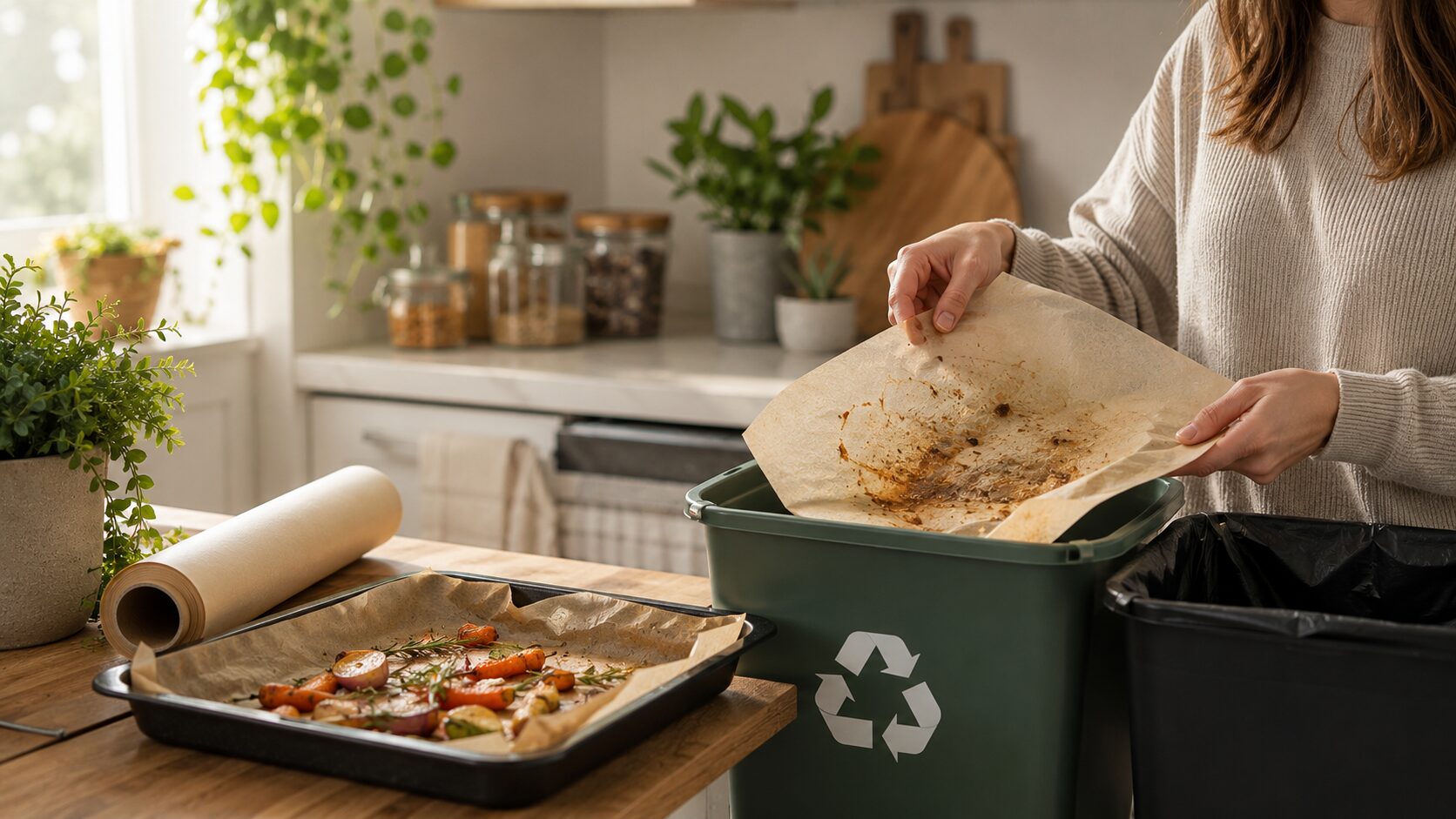
Sustainability has become a major consideration for both home bakers and commercial food businesses across the UK. As pressure increases to reduce waste and improve environmentally responsible packaging practices, many people are now asking an important question:
Can baking paper actually be recycled?
The answer is not always straightforward.
While some forms of baking paper can be recycled or composted, others cannot be due to the coatings and food contamination involved. Understanding the difference is essential for bakeries, food manufacturers, cafés, and consumers looking to reduce their environmental impact responsibly.
What Is Baking Paper Made From?
Baking paper – sometimes referred to as parchment paper – is typically produced from cellulose-based paper that has been treated to provide:
• heat resistance
• non-stick performance
• grease resistance
• moisture protection
Most modern baking papers are coated with silicone, which creates the familiar non-stick surface used in ovens and food preparation.
This silicone coating is where recycling becomes more complicated.
Can Silicone-Coated Baking Paper Be Recycled?
In most UK recycling systems, silicone-coated baking paper is not widely accepted in household paper recycling bins.
This is because:
• the silicone coating can interfere with paper recycling processes
• food residue contaminates paper fibres
• grease absorption reduces recyclability
• thin coated papers are difficult to separate during processing
As a result, heavily used baking paper will usually need to be disposed of in general waste unless it is specifically certified compostable.
Is Baking Paper Compostable?
Some baking papers are certified compostable, but not all products meet the same environmental standards.
Compostable baking paper is usually:
• unbleached
• PFAS-free
• made using sustainable pulp sources
• certified for industrial or home composting
However, even compostable paper may become unsuitable for composting if heavily contaminated with:
• oils
• meat fats
• chemical residues
• burnt food waste
For commercial bakeries and food manufacturers, checking supplier specifications is essential before making environmental claims.
The Difference Between Recyclable and Compostable
These two terms are often confused.
Recyclable
A recyclable material can be processed and reused to create new products.
Compostable
A compostable material breaks down naturally into organic matter under composting conditions.
A product may be:
• compostable but not recyclable
• recyclable but not compostable
• neither
• or both under certain conditions
This distinction matters significantly when selecting food-contact packaging materials.
Why Sustainable Food Packaging Matters
Food packaging waste continues to be a growing concern across the UK food industry.
Businesses are increasingly expected to:
• reduce plastic usage
• improve recyclability
• minimise landfill waste
• support circular economy initiatives
• meet sustainability targets
Consumers are also becoming far more environmentally conscious when choosing suppliers and food brands.
For bakeries and food manufacturers, sustainable packaging is no longer simply a marketing feature. It has become part of long-term operational responsibility.
What Should You Look for When Buying Baking Paper?
When sourcing environmentally responsible baking paper, consider:
• FSC® certification
• composability certification
• PFAS-free manufacturing
• silicone coating type
• food-contact compliance
• supplier sustainability policies
• paper origin transparency
Not all “eco-friendly” claims are equal. Reliable technical documentation should always be requested from suppliers.
Final Thoughts
Baking paper can sometimes be compostable, but it is not always recyclable through standard UK household recycling systems.
The material composition, silicone coating, food contamination, and local recycling capabilities all influence how baking paper should be disposed of responsibly.
For businesses operating within the food sector, selecting sustainable food-contact paper products is becoming an important part of both environmental responsibility and long-term brand positioning.
Choosing the right paper products today helps support a more sustainable food industry tomorrow.
Please contact us at [email protected], or for guidance on selecting the most appropriate paper for a specific application, contact the Linwood Raker team.